

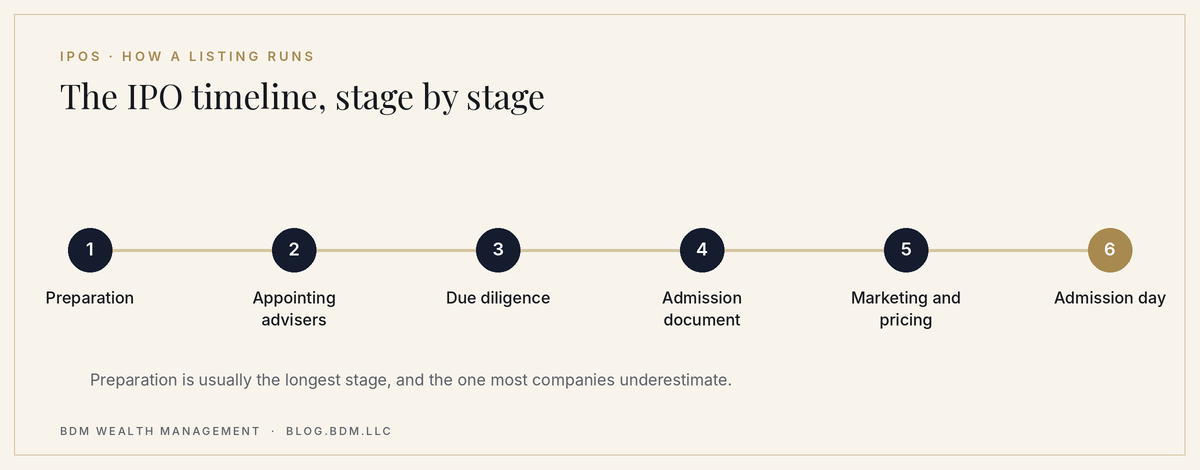
Every listing is different in the detail, but most follow the same broad sequence. Knowing the stages, and where the delays usually come from, helps a board plan realistically and keep the process on track.
1. Preparation
Before any formal work begins, the company gets itself ready: audited accounts in order, a board with the right mix of experience, governance that will stand up to public scrutiny, and a clear equity story. This stage is often the longest, and the one most companies underestimate.
2. Appointing advisers
The company appoints its key advisers. Depending on the market this typically includes a nominated or sponsoring adviser, a broker, lawyers and reporting accountants. The adviser team shapes everything that follows.
3. Due diligence
The advisers examine the business in detail: financial, legal and commercial. The reporting accountants review the numbers, the lawyers review contracts, title and disputes. Issues found here need to be resolved before the company can list.
4. The admission document or prospectus
The company, with its advisers, prepares the document that will be published to investors. It describes the business, its risks, its financial history and the terms of the offer. Drafting and verifying it takes several rounds.

5. Marketing and pricing
The broker introduces the company to investors, gauges demand and helps set the price. Management presents the equity story in meetings. Demand at this stage determines how much can be raised and at what price.
6. Admission and first day of trading
The document is published, the shares are admitted to the market and trading begins. The company is now public, with ongoing obligations to report and disclose.
Where the delays come from
Delays almost always come from the early stages: accounts that are not audit-ready, governance gaps, or problems found in due diligence. Market conditions can also shift the timetable at the pricing stage.
The companies that list most smoothly are those that do the preparation work well before they appoint advisers.
Mark Johnson is the Founder of BDM Capital, which introduces capital raising opportunities across bonds, loan notes, IPOs and SEIS/EIS. To discuss a raise, get in touch.
Frequently asked questions
Preparation usually runs a year or more before the listing date, dominated by accounts, structure and governance work. The public phase of marketing, book-building and admission is normally the final few weeks.
Readiness and clean-up, appointing advisers, due diligence and prospectus drafting, pre-marketing to investors, the public offer or placing, pricing, and admission to trading.
Accounts that cannot be audited to the required standard, unresolved legal or shareholder issues, and market conditions that force a pause once the company is otherwise ready.
BDM Capital is not authorised or regulated by the Financial Conduct Authority. This article is general information, not financial, tax or legal advice, and does not constitute an offer or invitation to invest. Capital is at risk and you may get back less than you invest. Written for founders and directors of businesses considering a raise. Take independent professional advice before making any investment decision.