

When a growing company needs debt, the first instinct is usually to go to the bank. For many businesses that is the right answer. But it is not the only one, and for some companies a bond or loan note issued to investors suits better.
How they differ
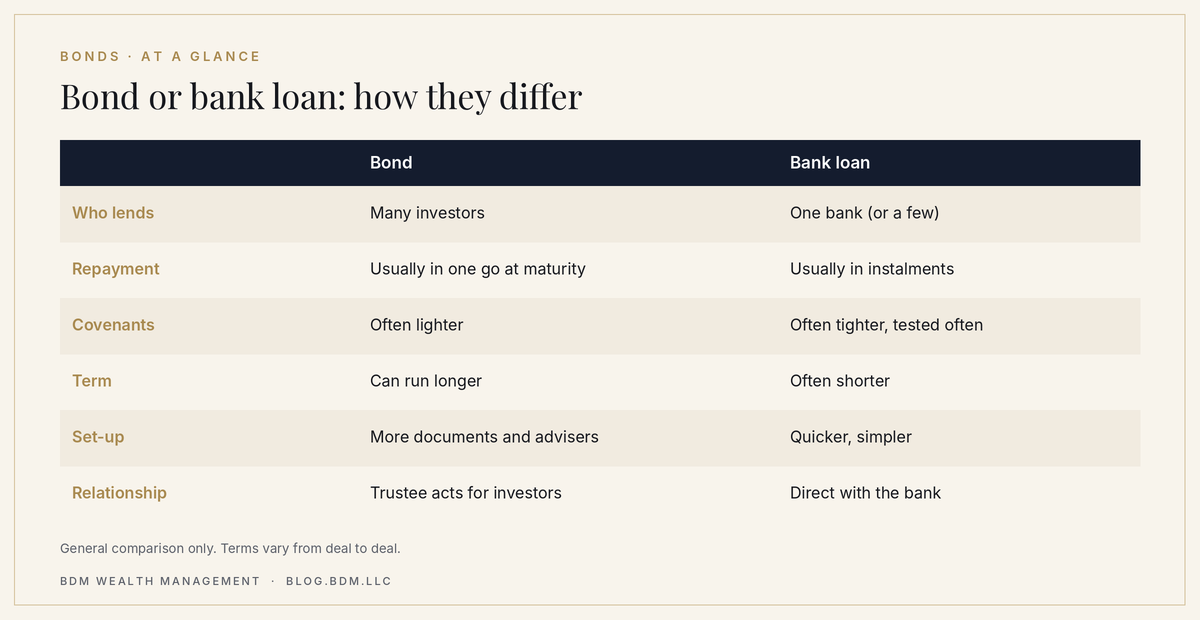
Who you owe. A bank loan is owed to one lender with a single relationship. A bond is owed to many investors, often represented by a trustee.
Availability. Banks lend against strict criteria: trading history, security, cash flow. Businesses that fall outside those criteria may find bank finance unavailable or limited. A bond can sometimes reach investors willing to take a different view.
Flexibility. Bank facilities can often be drawn and repaid flexibly and renegotiated with one party. Bonds are usually fixed in amount and term, and changing them may require bondholder consent.
Repayment profile. Bank loans commonly amortise, with regular capital repayments. Bonds often repay in one amount at maturity, which helps cash flow during the term but needs planning for the end.
Covenants and control. Banks typically impose detailed covenants and monitor closely. Bond terms vary, but can sometimes be lighter.
Cost. Bank debt, where available, is often cheaper. Bonds may carry a higher coupon plus issue costs, in exchange for access, flexibility of structure or a longer term.

When each makes sense
A bank loan often suits an established business with a strong trading record, good security and a need for flexible working capital.
A bond can suit a business that needs a larger amount than banks will provide, wants a longer term or bullet repayment, or has a story that investors will back where a bank’s lending criteria will not.
Not either-or
Many companies use both: bank facilities for working capital, a bond for longer-term funding. The key is making sure the two fit together, particularly on security and ranking, so one does not block the other.
Mark Johnson is the Founder of BDM Capital, which introduces capital raising opportunities across bonds, loan notes, IPOs and SEIS/EIS. To discuss a raise, get in touch.
Frequently asked questions
Start with the bank: if it will lend enough on acceptable terms, it is usually cheaper and simpler. A bond makes sense when the bank will not, when the business needs a longer fixed term, or when the owners will not give personal guarantees.
A bank loan is one lender, usually with tighter covenants, floating rates and ongoing monitoring. A bond spreads the debt across many investors, often at a fixed rate with repayment at maturity, but costs more to arrange and must be marketed.
Yes, provided the ranking between them is agreed. Banks usually require senior security, so the bond will often rank behind it and carry a higher coupon to reflect that.
BDM Capital is not authorised or regulated by the Financial Conduct Authority. This article is general information, not financial, tax or legal advice, and does not constitute an offer or invitation to invest. Capital is at risk and you may get back less than you invest. Written for founders and directors of businesses considering a raise. Take independent professional advice before making any investment decision.